
The war that began with large-scale U.S. and Israeli attacks on Iran has now reached a point where its true nature can no longer be concealed. What has collapsed is not merely a military scenario, but the very doctrine of short war as a tool for managing capitalist crisis. This war was meant to paralyze the Islamic Republic’s power structure through a lightning strike, trigger collapse from above, and pave the way for a reconfiguration of the regional order. Yet this project reached a dead end in its very early stages.
The Islamic regime – with its long and bloody record of repression against workers, women, and social movements – has neither collapsed nor ceased to function. This regime, which for decades has ruled through prisons, torture, executions, and the suppression of uprisings, has now, within the context of war, found a renewed possibility to reconstruct its power. This is one of the fundamental contradictions of imperialist wars: the very wars launched in the name of “freedom” and “liberation” end up reinforcing the same forms of despotism they claim to overthrow.
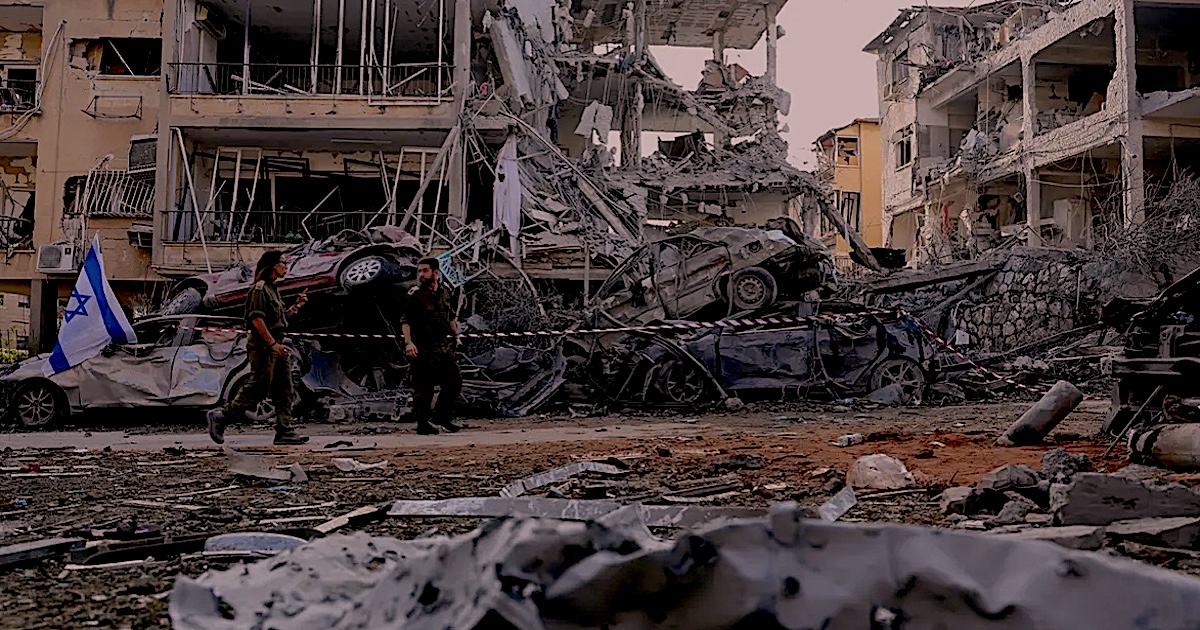
At the same time, the destruction and killing carried out by the United States and Israel have reached far more extensive and devastating levels. The bombing of infrastructure, the targeting of vital centers, and the expansion of the war into the sphere of energy and economic reproduction show that this war is not merely directed against a regime, but against the very foundations of social life on a regional scale. What is being destroyed is not only military bases, but water systems, electricity networks, transportation, production, and the daily life of millions of people.
Here, the real connection between war and capitalist crisis becomes clear. The current war is not a “political mistake,” but a structural response to the accumulated contradictions of capital reproduction. A system incapable of resolving its own crises turns to destruction, militarism, and imperialist competition in order to restore the conditions of accumulation. The shift of the war’s center of gravity to the Strait of Hormuz, energy infrastructures, and global trade routes reveals this reality: war has become an instrument for the violent restructuring of capitalist reproduction.
The inability of the United States and its allies to achieve a rapid victory has thus pushed them toward a different form of war: not a war for immediate regime change, but a war of destruction, economic pressure, and the production of a “symbolic victory.” The threat to destroy vital infrastructure – including the electricity grid – must be understood within this framework. When real victory becomes unattainable, imperialist powers attempt to transform strategic failure into political success by staging a moment of apparent dominance.
Yet this war is not confined to states alone; it produces profound social consequences. It diverts and marginalizes social movements and emancipatory potentials, and in some cases transforms them into fuel for proxy wars. Meanwhile, right-wing and neo-fascist forces, relying on foreign intervention, attempt to present themselves as alternatives, while in practice becoming part of the imperialist war machinery.
This is therefore not a war between the peoples of Iran and the region, but a war between states and capitalist blocs seeking to reconstruct their crisis-ridden order. Neither the Islamic Republic nor the United States and Israel represent the people. Both sides operate within the same logic: preserving power, controlling resources, and managing crisis through violence. The war has not even achieved its limited objectives of imposing change from above through military pressure; instead, it has brought the crisis of capitalism and its destructive nature directly onto the battlefield.
In the face of this situation, the answer does not lie in choosing between two reactionary poles, but in building an internationalist anti-war and anti-capitalist movement. Such a movement can only have meaning if it goes beyond moral protest and organizes an independent internationalist force capable of confronting the war machinery of states.
This means building anti-war and anti-capitalist centers within the everyday life and workplaces of workers and the oppressed – in Iran, across the region, and globally – and standing against all forms of nationalism and war-mongering.
Toward anti-war and anti-capitalist centers
Against nationalism and fascism
Long live internationalism
March 22, 2026
Internationalist Workers’ Organization
