
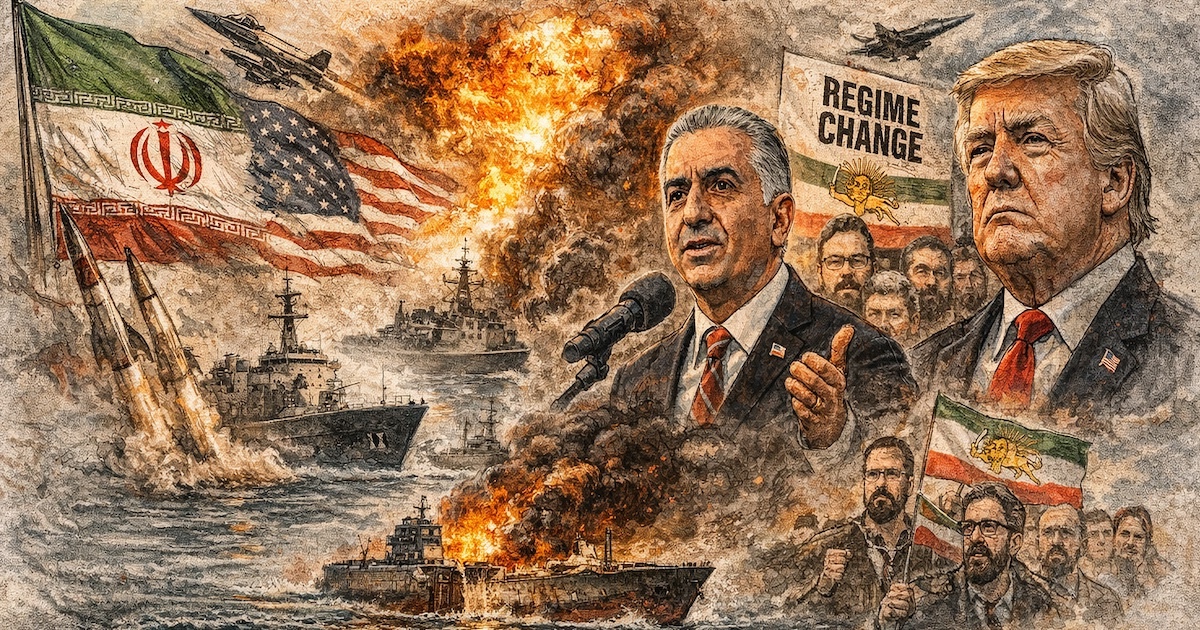
With the premature end of negotiations, Iran and the United States effectively acknowledged their failure. This failure was not due to minor disagreements but the result of a clash between two opposing strategies: on one side, the US attempt to impose structural limits on Iran’s nuclear and regional capacities, and on the other, the Islamic Republic’s insistence on preserving these tools as guarantees of survival. As a result, the talks did not produce even a temporary agreement but ended in a complete deadlock.
The decision by Donald Trump to move toward maritime pressure in the Strait of Hormuz is a direct expression of this deadlock. It marks a shift from diplomacy to coercion. By targeting Iran’s oil exports and disrupting its financial flows, the US seeks to increase the cost of rejecting a deal. However, this strategy carries an inherent contradiction: pressure on Hormuz—one of the world’s most critical energy chokepoints—simultaneously risks destabilizing global markets and intensifying the energy crisis.
Under these conditions, the immediate outlook is neither a stable agreement nor full-scale war, but an unstable situation where economic pressure, military threats, and intermittent mediation coexist. Any escalation in maritime control or asymmetric Iranian responses could quickly lead to direct confrontation in the Persian Gulf.
At the same time, efforts to construct political alternatives from above are intensifying. The presence of رضا پهلوی in Sweden and his invitation to parliament by right-wing forces indicate ongoing attempts to legitimize a specific external political alternative.
Within this context, a segment of the Iranian diaspora—interacting with far-right forces in Europe and the United States—is moving toward the formation of a neo-fascist tendency. While not yet fully consolidated, this trend could become a significant force under current conditions.
In sum, the situation reflects both an escalation of geopolitical pressure and attempts to shape reactionary alternatives from above. In the absence of an independent and organized social force, this crisis risks reproducing itself in more destructive forms.
April 12, 2026
Internationalist Workers’ Organization
