
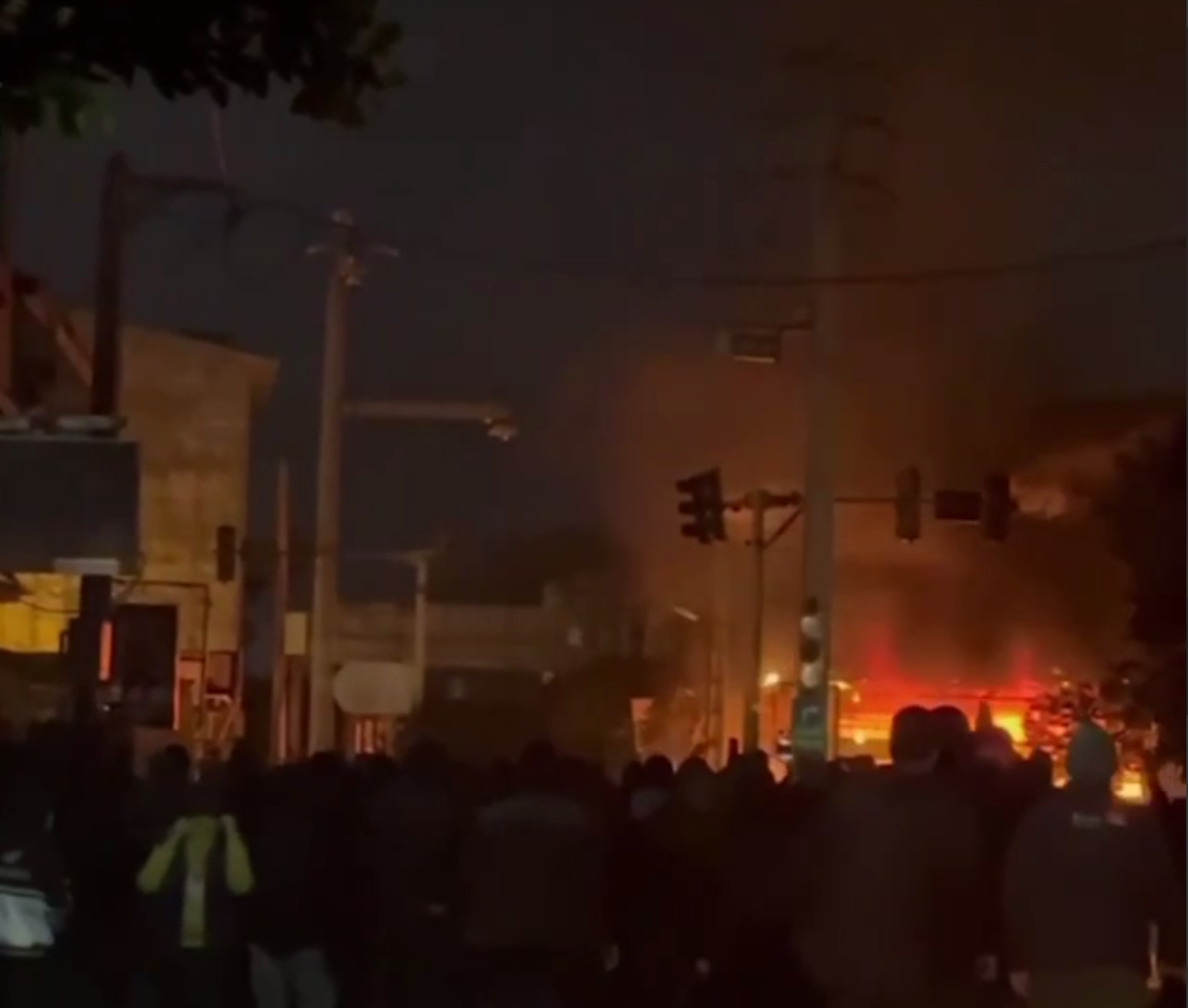
Iran today is the scene of a mass uprising: millions of angry protesters and the courageous confrontation of militant youth with the forces of repression. Despite internet shutdowns and the killing of hundreds of young fighters in recent days, streets and public squares remain under the control of vast numbers of demonstrators. The heroic resistance of the youth against state repression, and their attacks on centers of coercive power, testify to the persistence of revolutionary conditions.
Yet the absence of an organized and revolutionary alternative has placed the uprising in grave danger—at risk of expropriation and war.
Under the pressure of brutal repression, the lack of a clear political horizon, and the absence of a revolutionary alternative, sections of desperate youth have turned toward monarchist and proxy symbols, placing their hopes in “military assistance” from foreign powers, especially the United States. This deviation has increasingly exposed the uprising to being transformed into an instrument of imperialist rivalry and regional power struggles.
The present situation is not the result of “individual or group mistakes,” but the outcome of the combined effects of contemporary capitalist domination, the hegemony of imperialist media, and the absence of working-class leadership. The dominance of militarism, war logic, and great-power politics is not the cause of today’s crisis—it is the product of a historic failure to build an independent working-class movement.
Nevertheless, the current uprising remains in the initial phase of a revolutionary situation: those below are no longer willing to live under the existing order, while those above are incapable of reproducing their rule in a stable manner. But in the absence of an independent working-class politics and collective leadership from below, the legitimate anger of the masses is inevitably channeled toward forces that are more organized, louder, and better prepared—forces backed by the media, financial, and political power of global capital and powerful states.
This is why we now witness the elevation of images of a “modern dictator” alongside those of an old one. The revival of the Pahlavi symbol or hopes placed in aerial bombardment stem from a real political dead end and the active promotion of a “salvation from above” scenario. A segment of youth who confront death daily in the streets, and who see no clear political horizon ahead, cling to any promise of a “quick end to hell”—even if the price is the transformation of the country into a proxy battlefield.
Monarchy is not an alternative to clerical rule; it is a continuation of the same order in a different form—just as a bourgeois republic is no emancipatory alternative. Both represent different paths toward restoring the same system of exploitation and repression. Military intervention by the United States or any other foreign power, even if it leads to the rapid collapse of the regime, would plunge society into militarized politics, fragmented power, and the violent reconstruction of capitalist order. In such conditions, the possibility of independent organization from below—workers’ councils, mass assemblies, and paralyzing strikes as the driving force of revolution—would be eliminated. What is called “military assistance” in practice means stripping the masses, and above all the working class, of their historical initiative.
Workers, freedom-seeking people, and militant youth!
The days ahead are decisive. The growing danger of U.S. military attack and the dominance of nationalist and grandeur-driven symbols signal an increased risk that this uprising will slide into becoming a bargaining chip in the power struggles and wars of states. In such a scenario, your courage and the blood of your sons and daughters will be converted into political capital for reactionary forces at both national and global levels.
Yet the path is not closed. The current uprising must either turn toward independent organization from below—building defense structures for protests rooted in communities and workplaces, and rejecting the reactionary Pahlavi current—or Iran will enter a new period of war, foreign intervention, and the violent reorganization of exploitation and repression.
Do not allow the blood spilled on the streets to become a red carpet for new tyrants.
Do not allow this uprising to be turned into an instrument of power struggles and proxy wars.
January 11, 2026
Internationalist Workers’ Organization
